
CA Bill to Add 'Jewish' Ethnicity Option
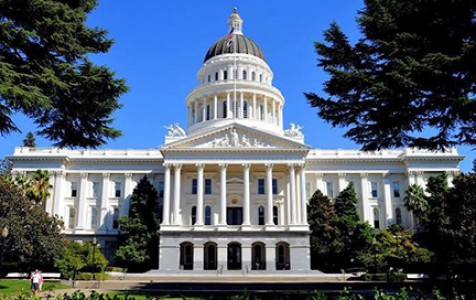
If passed, state agencies would be required to include "Jewish" as a separate category in demographic data, with aggregated data to be included in official reports starting January 1, 2027, and updates to forms by January 1, 2029.
SB 1387 amends California law by updating the Education Code to include Jewish identity in ethnic classification. It adds "Jewish" to the self-identification categories in the Penal Code used by the California Department of Corrections and Rehabilitation.
Additionally, it revises the Unemployment Insurance Code to ensure the Employment Development Department collects data on Jewish ancestry for those claiming disability or paid family leave benefits.
SB 1387 addresses modern Jewish identity, emphasizing that being Jewish encompasses culture, language, history, and ancestry, not just religious belief. Data from the Pew Research Center indicates that 52 percent of American Jews identify by ancestry and 55 percent by culture, while only 36 percent cite religious observance.
Also, 27 percent identify as having no religion, often overlooked in state datasets.
Supporters argue that this lack of ethnic recognition leads to policy issues, such as misclassified hate crimes, gaps in public health research, and inadequate civil rights evaluations. They highlight the need for comprehensive health data on genetic conditions prevalent in Jewish populations, like Tay-Sachs and BRCA-related cancer risks.
The bill, sponsored by Jewish California, represents over 40 Jewish federations and community groups. Cliff Berg testified before the Assembly Committee on Privacy and Consumer Protection, arguing that current systems obscure Jewish residents in decision-making processes and fail to accurately categorize antisemitic hate crimes, which often relate to ethnic background.
Legislators such as Assemblymember Chavez Zbur note that enhanced data collection can help identify socioeconomic disparities without creating public registries. Assemblymember Catherine Stefani highlighted the rise in antisemitic incidents, affirming that accurate demographic tracking is essential for effective state responses.
The California Federation of Teachers supports the bill, stating that detailed population data is vital for sound policy decisions.
However, SB 1387 faces opposition from Jewish organizations like Jewish Voice for Peace, who argue that reducing Jewish identity to a single ethnic checkbox overlooks the community's cultural diversity.
Clyde Leland of Jewish Voice for Peace Bay Area testified before the Assembly Judiciary Committee, stating that Jewish people come from diverse regions like Eastern Europe, North Africa, the Middle East, and South Asia, and have unique cultural practices that defy a single ethnic label. He argued that current legal frameworks already ensure equal rights for religious practice, and creating a separate ethnic designation would incur unnecessary costs without real policy benefits.
Religious leaders opposing the measure have highlighted concerns about cultural representation. Rabbi Kat Davis of Beyt Tikkun noted that labeling Jewish Californians with a single ethnic identifier overlooks the diverse histories of Mizrahi, Sephardic, and non-European Jews from North Africa and the Middle East.
Davis argued that true safety for minority communities comes from broad coalition-building and civil rights protections rather than strict categorization, especially during politically tense times.
Concerns about data collection arose during legislative hearings, with Sydney Levy from YesWANA Bay and Jewish Voice for Peace citing past abuses of state registries tracking Jewish populations. Levy warned that differentiating records by religious group threatens the constitutional separation of church and state.
In response to privacy issues, legislative sponsors highlighted that SB 1387 includes strict privacy controls, requiring all demographic data to be anonymized and released only in aggregate form. Personal identifying details remain confidential under state records laws and the Information Practices Act of 1977.
Amendments to the Penal Code require that any demographic group with a population under 50 be reported as "fewer than 50" to avoid individual re-identification. Under SB 1387, completing demographic forms is voluntary, allowing respondents to choose multiple options or decline.
Senator Stern said that this creates an optional self-identification category on state forms while respecting California's privacy rights.
SB 1387 has progressed rapidly, passing the California State Senate unanimously (33-0) and clearing the Assembly Committee on Judiciary (12-0) and the Committee on Privacy and Consumer Protection (15-0). It is now pending before the Assembly Appropriations Committee, with a final vote expected before the legislative session ends.
For any inquiries or further information, please contact Jose Cervantes at JoseC.Press@pm.me
Category:
- Log in to post comments
Featured Video

Beachcomber
Copyright 2026 Beeler & Associates.
All rights reserved. Contents may not be reproduced or transmitted – by any means – without publisher's written permission.

